How to Choose the Best Residential Solar Systems for Your Home?
When considering the best residential solar systems for your home, expert insights are invaluable. John Smith, a leading authority in renewable energy, emphasizes, "Choosing the right solar system can significantly reduce energy costs." Many homeowners are eager to harness solar energy but feel overwhelmed by options.
The market offers various residential solar systems, each with unique features and benefits. Factors like efficiency, storage capacity, and warranty play a crucial role in decision-making. Some systems promise high output but may lack reliability. Researching and consulting experts is essential to avoid common pitfalls.
Despite growing interest, some individuals still hesitate. They worry about upfront costs and installation challenges. Reflecting on these concerns helps homeowners make informed choices. Embracing solar energy can lead to long-term savings and sustainability, contributing to a greener future.
Understanding Your Energy Needs and Consumption Patterns
Understanding your energy needs and consumption patterns is vital when selecting the best residential solar systems. Start by assessing your electricity bills. Look for patterns in your monthly usage. Identify peak usage times to gain insights into your household's energy demands. This data will help tailor your solar system effectively.
Tips: Track your energy consumption for at least six months. Use this period to identify trends in your usage. This can help you understand when you consume the most electricity.
Consider the appliances that draw the most power. Refrigerators, air conditioners, and heating systems can significantly affect your energy consumption. Knowing how these appliances impact your usage can guide your solar system size. A larger system may be necessary if you heavily rely on such devices.
Tips: Prioritize energy efficiency. Upgrading to energy-efficient appliances can reduce your overall consumption before solar installation. Even small adjustments matter and can impact your long-term savings.
Evaluate your energy goals, too. If you're aiming for complete off-grid living, your system needs to be larger. If your goal is simply to reduce reliance on the grid, a smaller system may suffice. Balancing energy needs with your lifestyle ensures better satisfaction with your solar investment.
Evaluating Different Types of Residential Solar Systems
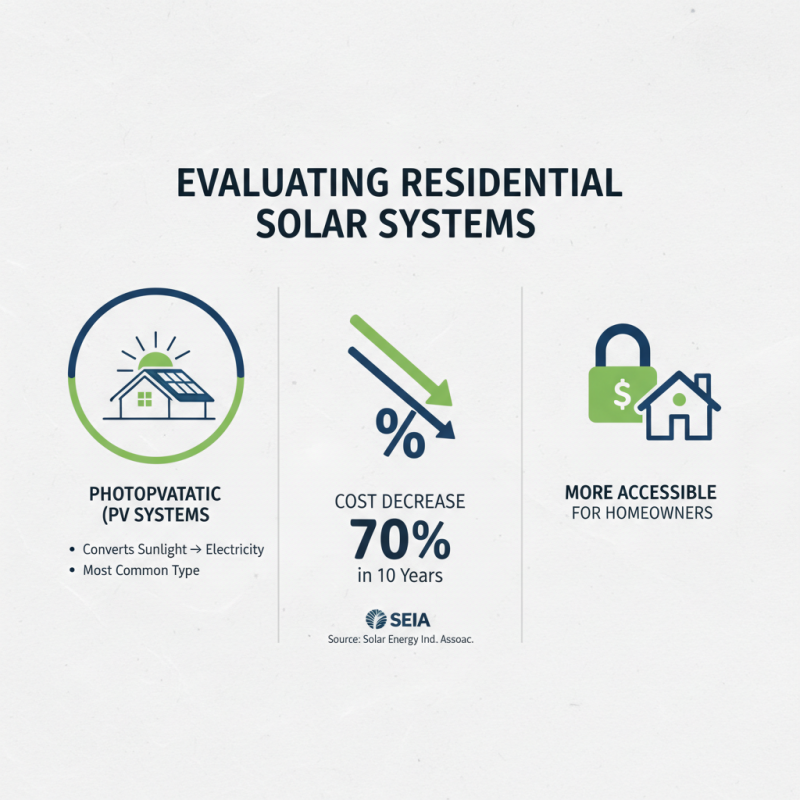
When evaluating different types of residential solar systems, it’s essential to consider their unique characteristics. Photovoltaic (PV) systems are commonly used. These systems convert sunlight directly into electricity. According to the Solar Energy Industries Association, the average cost of residential PV systems has dropped by 70% in the last decade. This trend makes solar energy more accessible to homeowners.
Another option is solar thermal systems. These capture heat from the sun. They can provide hot water for domestic use or pool heating. Though often more efficient in hotter climates, their installation and operational complexities can be challenging. A study from the National Renewable Energy Laboratory indicated that while these systems can be highly effective, they may not be the best choice for every home due to variable climate conditions.
Battery storage is also worth consideration. It allows homeowners to store excess energy generated during peak sunlight hours for later use. Data shows that homes with battery systems can increase energy independence significantly. Yet, battery systems often come with a hefty upfront cost. It’s important to weigh these costs against long-term savings on energy bills. All these factors show that an informed choice must be made, ensuring alignment with individual needs and circumstances.
Factors to Consider When Selecting Solar System Components
Choosing the right solar system components can be overwhelming. Various factors play a crucial role in optimizing energy efficiency. Start with assessing your energy needs. Calculate your average monthly energy consumption. This information helps in determining the size of the solar system required for your home.
Next, consider the type of solar panels. There are different technologies available. Each has its efficiency levels and costs. Some panels perform better in low light conditions, while others are suited for larger spaces. Researching these options deepens your knowledge about what suits your home best.
Don’t overlook the inverter type. It converts solar energy into electricity. Microinverters can enhance performance, especially if shading is an issue. Battery storage systems increase energy independence but require high initial investments. Evaluate the lifespan and warranty options available, as these aspects greatly affect long-term reliability. There’s no one-size-fits-all, so reflect on your unique circumstances and preferences.
Local Regulations and Incentives for Residential Solar Installations
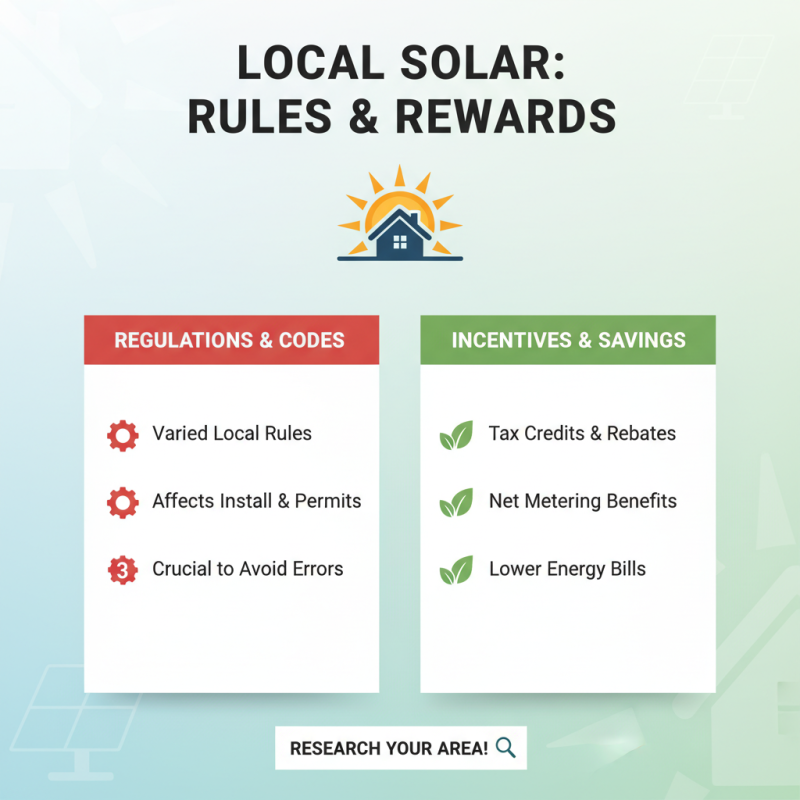
When considering residential solar installations, local regulations play a crucial role. Each area has distinct codes and requirements. These can affect installation methods and permitting processes. Understanding these regulations is essential to avoid costly mistakes.
Incentives for solar systems also vary by location. Many governments offer tax credits, rebates, or grants to encourage solar adoption. They can significantly reduce installation costs. However, the paperwork may be complex. Homeowners should research available options thoroughly.
It's essential to consult local energy authorities or solar experts. They can provide critical insights into compliance and potential savings. Sometimes, information is hard to navigate. Not every homeowner is aware of all available benefits. Regularly reviewing state policies is a smart practice to stay informed.
Assessing Installation Costs and Long-term Financial Benefits
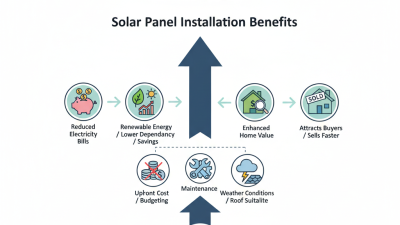
When considering residential solar systems, installation costs play a crucial role. A detailed assessment of these costs helps homeowners make informed decisions. Installation expenses can vary significantly based on system size, location, and roof condition. Typical installation fees often encompass labor, permits, and materials. If your roof requires repairs or reinforcement, those costs can escalate.
Long-term financial benefits are another key factor. Solar systems can lead to substantial savings on electricity bills. Homeowners may also benefit from tax incentives and rebates. These financial advantages can offset initial investment costs. However, it’s important to analyze solar potential for your home. A poorly positioned solar array might not deliver expected energy savings.
Choosing the right system involves careful planning. Seek professional expertise to evaluate your unique situation. Understanding financial options, like leasing versus purchasing, can influence your decision. It’s essential to periodically reassess your energy needs and system performance. Solar technology advances rapidly, and regular evaluations ensure optimal benefits.
Comparative Analysis of Residential Solar System Costs and Benefits