Best Parking Lot Solar Panels for Sustainable Energy Solutions?
Parking lot solar panels are gaining traction in the renewable energy sector. According to a report by the Solar Energy Industries Association (SEIA), these systems can produce significant energy while utilizing otherwise empty space. The report states that installing solar panels in parking lots can reduce overall energy costs by as much as 40%.
Leading industry expert Dr. Emily Foster notes, “Parking lots often sit unused during peak sun hours; they present a prime opportunity for solar integration.” This insight highlights the untapped potential of parking lot solar panels. They not only provide sustainable energy but also create shaded areas for vehicles.
However, challenges remain. The upfront investment can be substantial. Some businesses hesitate to adopt these solutions. Additionally, local regulations might complicate installations. Exploring these concerns will help us better understand the future of parking lot solar panels in sustainable energy solutions.
Overview of Parking Lot Solar Panels
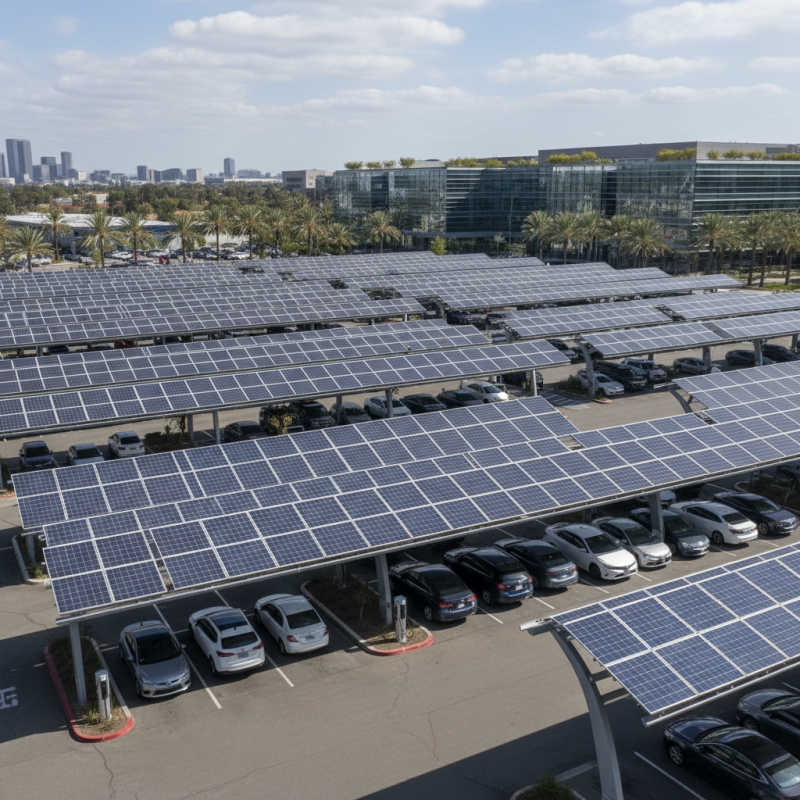
Parking lot solar panels are transforming underutilized spaces into energy hubs. By harnessing the sun's power, these systems provide dual benefits: generating clean energy and offering shaded parking areas. According to the Solar Energy Industries Association, commercial parking lots could generate up to 30% of the total solar energy currently installed in the U.S. This data reveals the significant potential for sustainability.
Implementing these solar structures involves costs and logistical challenges. A comprehensive study found that installation costs can vary widely based on location, ranging from $1 million to $3 million per project. However, the long-term savings on energy bills and potential incentives can make these projects worthwhile.
Yet, many companies hesitate to invest. Concerns about maintenance and efficiency linger, especially in regions with inconsistent sunlight. Additionally, the aesthetic impact on parking lots raises questions. Would customers prefer a sunshade or exposed lot? Balancing functionality and appearance can be tricky.
Community engagement and transparent communication are crucial to address these concerns. The future of parking lot solar panels rests on collaboration and innovative designs that meet various needs.
Benefits of Using Solar Energy in Parking Lots
Parking lots often occupy vast spaces, making them ideal candidates for solar energy solutions. Installing solar panels in these locations provides several advantages. Firstly, it transforms an underutilized area into a renewable energy generator. This not only produces clean energy but can also power nearby facilities.
Shading parked cars with solar canopies helps reduce heat buildup inside vehicles. This is particularly valuable in hot climates. However, the initial installation cost can be a hurdle. Some may find the investment daunting. There are ongoing maintenance requirements, which could add to the overall expense.
Moreover, solar installations create opportunities for communities to engage with clean energy initiatives. They raise awareness about sustainability. This involvement, however, may require education and outreach efforts. Not everyone is aware of the benefits. Hence, proper communication is crucial for successful projects.
Benefits of Using Solar Energy in Parking Lots
Types of Solar Panels Suitable for Parking Lots
Parking lots can be transformed into renewable energy hubs through solar panels. The variety of solar panels available offers several options for this purpose. First, there are monocrystalline panels. They are efficient and ideal for limited space. Their sleek design appeals to aesthetic concerns, yet they may require a higher upfront cost.
Another option is polycrystalline panels. These are more affordable but slightly less efficient. They require more space, which can be a downside in dense urban settings. Thin-film solar panels also present a unique choice. They are lightweight and flexible, making them suitable for surfaces where traditional panels may not fit. However, their lower efficiency and shorter lifespan can raise questions.
Consideration must be given to shading. For instance, trees or building structures can hinder performance. Additionally, installation costs may vary widely based on site conditions. Community engagement is essential too. Incorporating local perspectives can help maximize both the financial and aesthetic benefits. Finding the right balance is key.
Installation Considerations for Parking Lot Solar Systems
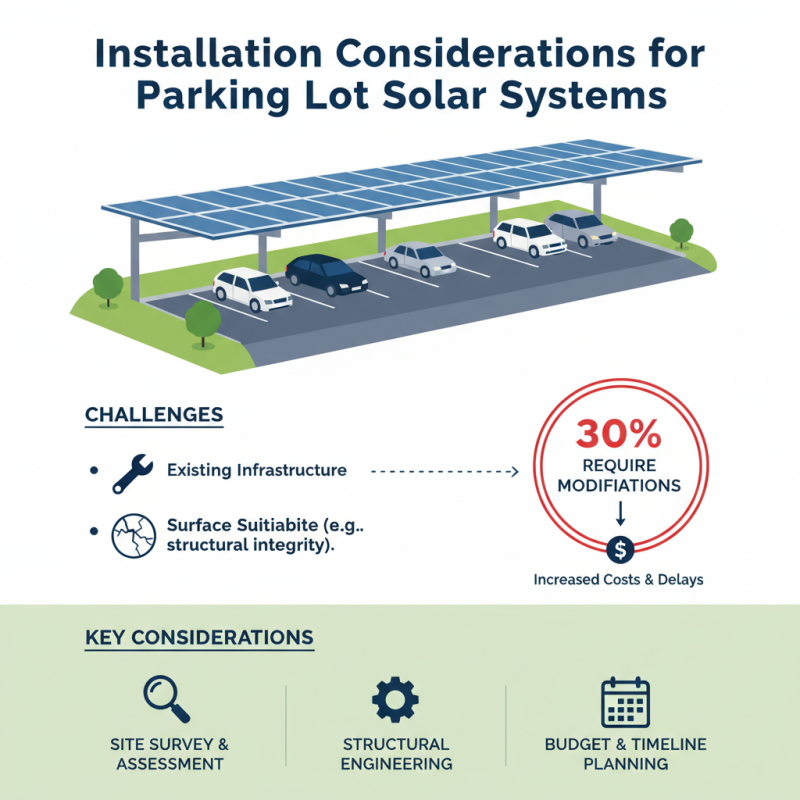
Parking lot solar systems offer a promising way to harness renewable energy. However, installation presents unique challenges. One critical consideration is the existing infrastructure. For example, is the parking surface suitable for mounting structures? Many spaces lack the structural integrity needed for heavy solar panels. A survey indicated that nearly 30% of parking lots would require significant modifications. This raises costs and delays.
Another aspect to consider is the orientation and tilt of the installation. Optimal angles can maximize energy capture. Research shows that a tilt between 20 to 30 degrees can increase efficiency by up to 15%. Additionally, shading from nearby buildings or trees should not be overlooked. A shaded panel can produce significantly less energy. Collaborating with site planners during the design phase typically yields better results.
Moreover, utility regulations can complicate the installation process. Local energy policies may impact the return on investment. In certain areas, challenges can lead to up to a 20% delay in project approval. Careful planning and understanding of these regulations are vital for success. Each project is unique and requires thorough analysis to determine the best approach.
Examples of Successful Parking Lot Solar Projects
Parking lot solar panels are a game-changer for sustainable energy. Many businesses and municipalities are leading the way with innovative projects. For instance, large retailers and office complexes have installed solar canopies over parking lots. These structures not only provide shade for vehicles but also generate clean energy.
A notable example is a university that transformed its parking area. They installed solar panels over multiple lots. This initiative significantly cut their energy bills. It also showcased a commitment to a greener future. Another project involves a city utilizing solar canopies to power public amenities. This approach turns a mundane space into an energy hub.
Tips: Consider the orientation of your solar panels. Sun exposure is crucial for efficiency. Engage with professionals familiar with local regulations. Sometimes, navigating these rules can be tricky. It’s essential to explore financing options. Each project can vary in costs and benefits, so be prepared to adapt. Ensure community involvement to promote acceptance.