How to Choose the Best Electric SUV Car for Your Needs?
The shift towards electric vehicles has gained unprecedented momentum. According to a report by the International Energy Agency (IEA), Electric Suv Car sales soared by 48% in 2022, highlighting strong consumer interest. This growth points to an evolving market where eco-friendly alternatives gain traction daily.
Choosing the right electric SUV car can feel overwhelming. With various models and features, selecting one that fits your lifestyle is crucial. Not all electric SUVs are created equal, displaying diverse ranges, charging options, and technological innovations. Research indicates that nearly 70% of potential buyers prioritize range, while others emphasize safety ratings and performance.
This decision-making process can be complex and requires thoughtful consideration. Evaluating your needs against available options will lead to a better choice. Reflecting on factors such as family size, driving habits, and budget can guide your selection. As you navigate the electric SUV car landscape, remain aware of the rapidly changing technology and market dynamics.
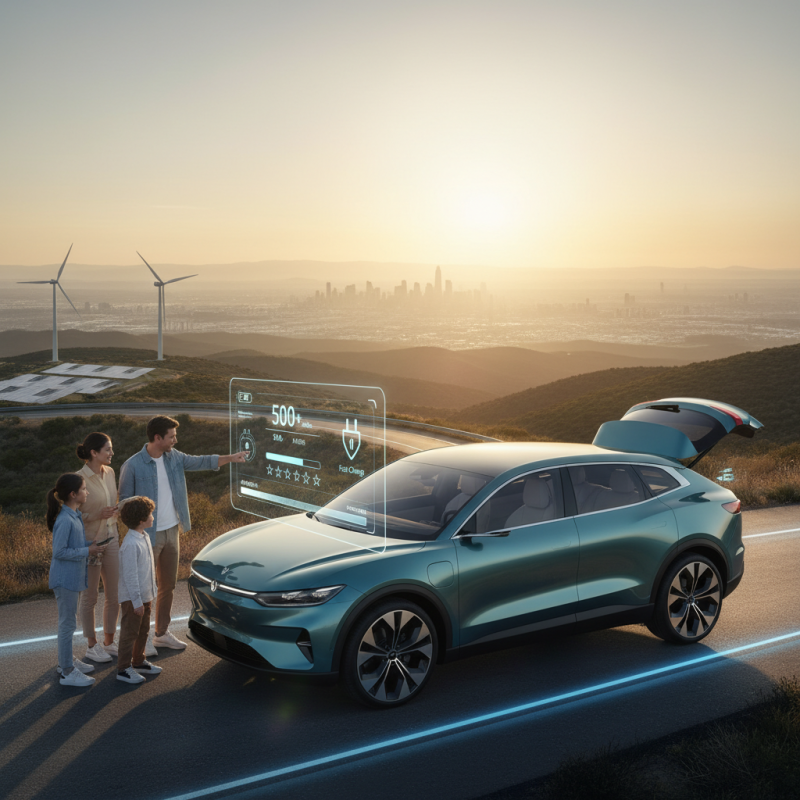
Understanding Your Driving Needs: Daily Commute vs. Long-Distance Travel
When selecting an electric SUV, it’s crucial to understand your driving needs. If your routine involves short commutes, you may not require an SUV with an extensive range. A compact model might suit you better. For daily errands, a range of 150 miles could be sufficient. Charging at home overnight can make your life easier.
On the other hand, if long-distance travel is often on your agenda, you should prioritize range. Look for models that offer at least 250 miles per charge. Rapid charging capabilities become vital for quick turnaround during longer trips. It’s important to consider the availability of charging stations along your frequent routes.
Sometimes, balancing energy efficiency and performance can be challenging. You might feel tempted to go for a high-performance model that consumes more energy. It’s a trade-off between power and practicality. Reflecting on your habits will help you choose the right electric SUV. Consider where and how often you drive. Every detail counts in making an informed decision.
How to Choose the Best Electric SUV Car for Your Needs?
| Dimension | Daily Commute | Long-Distance Travel |
| Range (miles) | 250 | 350 |
| Charging Time (Level 2) | 7 hours | 12 hours |
| Cargo Space (cubic feet) | 30 | 40 |
| Seating Capacity | 5 | 7 |
| Price Range ($) | 40,000 - 50,000 | 60,000 - 70,000 |
Evaluating Electric SUV Range: How Far Can You Go on a Single Charge?
When considering an electric SUV, range is a critical factor. How far can you go on a single charge? Understanding this can shape your experiences and expectations. Most modern electric SUVs offer impressive distances, often exceeding 200 miles. However, various factors influence this number.
Driving habits play a significant role. For instance, aggressive acceleration and high speeds can drain the battery faster. Terrain matters too. Steep hills can reduce range, while flat roads may extend it. Weather conditions affect performance as well. Cold temperatures often lead to diminished range. Taking these factors into account is essential for realistic planning.
Moreover, it's wise to evaluate your specific needs. Do you frequently drive long distances? Or do you mainly use your SUV for city commuting? Knowing your daily requirements can guide your choice. You might find that a model with a lower range suffices for short trips. Balancing your lifestyle with the right electric SUV enhances your satisfaction and reduces the likelihood of range anxiety.
Charging Options: Home, Public Stations, and Fast-Charging Technology
When choosing the best electric SUV, consider the charging options available. Home charging is the most convenient method. Most EV owners prefer to charge their vehicles overnight. Standard home chargers provide easy access, but they often deliver lower power, taking longer to fully charge the battery. According to the U.S. Department of Energy, about 80% of EV charging occurs at home, a statistic that highlights its importance.
Public charging stations are rising in number, offering various charging speeds. A report from the International Energy Agency indicates that the global network of public chargers has increased significantly, reaching over 1.5 million stations. However, not all networks are created equal. Many station locations may have inconsistent reliability or longer wait times, which can be frustrating for drivers in a hurry. Choosing a model with compatibility across multiple networks can mitigate this issue.
Fast-charging technology has revolutionized the EV charging experience. These stations can restore up to 80% of battery capacity in just 30 minutes. However, the availability of fast chargers can vary greatly. Research shows that urban areas typically provide better access compared to rural locations. If frequent long trips are part of your lifestyle, evaluate the fast-charging infrastructure along your planned routes. Flexibility and advance planning are key to ensure your electric SUV meets your needs efficiently.
Safety Ratings and Features: Why They Matter in Your Electric SUV Choice
When selecting an electric SUV, safety ratings play a crucial role. According to the Insurance Institute for Highway Safety (IIHS), vehicles that earn strong safety ratings often provide better protection in case of accidents. It’s important to review crash test results. SUVs with advanced safety features often outperform those without. For instance, models equipped with automatic emergency braking have shown a 50% reduction in rear-end collisions.
Additionally, technology features contribute to overall safety. Features like lane departure warnings and adaptive cruise control enhance driver awareness. A 2021 National Highway Traffic Safety Administration (NHTSA) report indicated that cars with these technologies could reduce serious injuries by up to 30%. These ratings and features are not just numbers; they reflect how well a vehicle can protect you and your passengers.
Choosing a model solely based on aesthetics can be misleading. A stylish design does not guarantee safety. While many electric SUVs boast sleek appearances, underlying safety performance is vital. Remember, the best choice integrates both safety and design elements. Always consider how safety ratings align with your driving habits and needs. Look beyond the surface. Making an informed decision ensures peace of mind on the road.
Cost of Ownership: Analyzing Purchase Price, Incentives, and Maintenance Costs
When considering the cost of ownership for an electric SUV, multiple factors come into play. The purchase price is a significant element. Recent studies show that electric SUVs typically range from $40,000 to $60,000. However, incentives can greatly reduce this price. For instance, federal tax credits can offer up to $7,500, along with state incentives. These savings can make electric vehicles more accessible.
Maintenance costs also warrant attention. Reports indicate that electric vehicles generally have lower maintenance expenses than their gasoline counterparts. You might save an average of 30% on maintenance. For example, fewer moving parts mean less wear and tear. Yet, battery replacements can be costly, often ranging from $5,000 to $8,000 after several years. This potential expense can be daunting.
It's important to think about long-term costs too. Charging infrastructure is growing, but home charging setups may require upfront investments. On average, a home charging station installation can cost between $1,000 and $2,000. Analyze your driving habits. If most trips are short, the savings can be substantial, yet long road trips may complicate charging logistics. Ultimately, weighing these various costs helps to create a clearer picture of ownership.


